

1. Introduction — A New Opportunity for Rural Healthcare
Rural healthcare organizations are being asked to expand access, modernize technology, strengthen cybersecurity, and support clinicians with limited resources. The federal Rural Health Transformation (RHT) Program represents a significant investment in accomplishing those goals. The program provides $50 billion over five years, with $10 billion available annually from 2026 to 2030. For rural hospitals and healthcare organizations, the range of opportunities that this funding can provide are wide, but it may be difficult to find a place to get started. Determining which technology investments can help transform local care and remain sustainable over time will be critical. This article will explore how the RHT program will aid healthcare organizations, how Prestige is uniquely positioned to assist, and how to get started within the fund.
2. What Is the Rural Health Transformation Program?
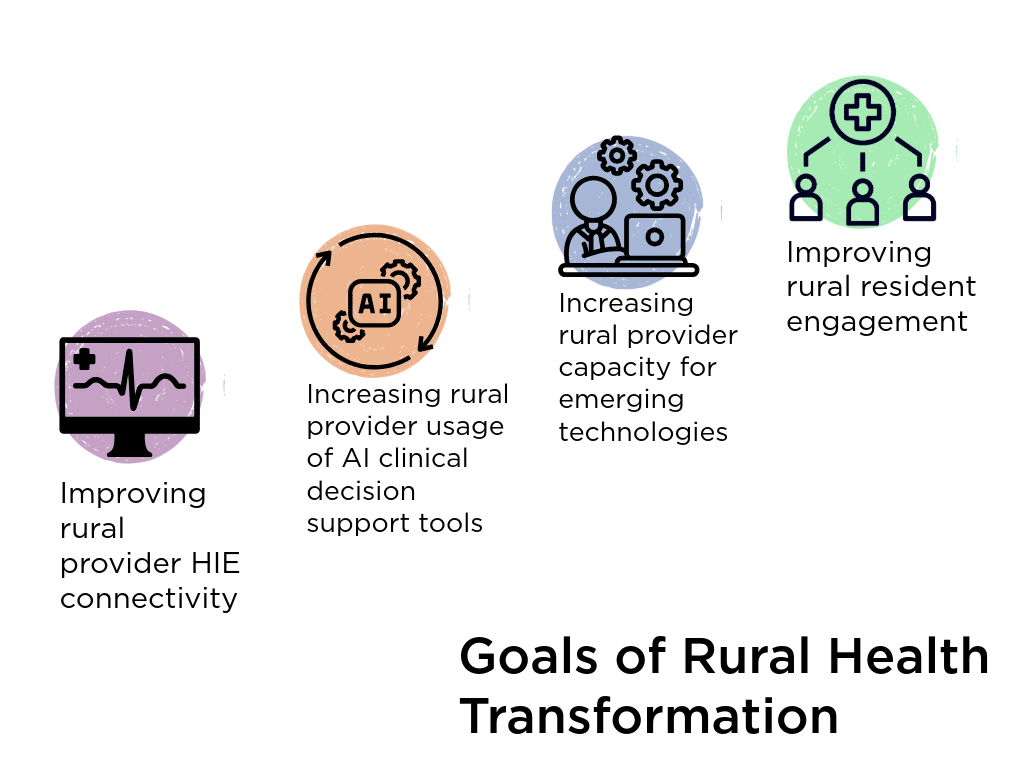
The Rural Health Transformation (RHT) Program is a $50 billion, five-year program covering the fiscal years of 2026 through 2030. Created under the One Big Beautiful Bill Act (Section 71401 of Public Law 119-21), and administered through the Centers for Medicare & Medicaid Services (CMS) towards all 50 states, this fund is dedicated towards a few key goals related to the rural healthcare field:
- Make rural America healthy by supporting rural health innovations that will will use evidence-based, outcomes-driven interventions to improve disease prevention, chronic disease management, behavioral health, and prenatal care.
- Sustainable access through helping rural providers become long-term access points for care by improving efficiency and sustainability. RHT Program support will help rural facilities share or coordinate operations, technology, primary and specialty care, and emergency services between more supplied organizations.
- Workforce development through attracting and retaining a high-skilled health care workforce by strengthening recruitment and retention of healthcare providers in rural communities. Helping rural providers practice at the top of their license and develop a broader set of providers to serve a rural community’s needs, such as community health workers, pharmacists, and individuals trained to help patients navigate the healthcare system.
- Innovate care by incentivizing providers or Accountable Care Organizations (ACOs) to reduce health care costs, improve quality of care, and shift care to lower cost settings.
- Innovate tech through fostering breakthroughs in efficient care delivery, data security, and access to digital health tools by rural facilities, providers, and patients.
What exactly does this mean for rural health organizations? Once funding is allotted, each state then administers programs and funding opportunities for rural healthcare organizations that have programs which match these initiative goals. Hospitals and clinics receive the funding as subawards, and must use funds in at least three categories in the five official strategic goals. By submitting an approved and achievable plan for how they will implement their funding according to the RHT goals, organizations gain access to the funding.
What are states doing with RHT funding? Below are a few examples from a collection of southeastern states that fall under Prestige’s service areas.
- Alabama: Collaborative EHR/IT/cybersecurity, telehealth, maternal and fetal health, cancer digital regionalization, and EMS connectivity.
- Mississippi: Technology modernization, cybersecurity, HIE, telehealth, broadband, and remote patient monitoring.
- Arkansas: Telehealth, RPM, EMS connectivity, interoperability, cybersecurity, cloud infrastructure, and AI-enabled clinical environments.
- Georgia: Cybersecurity, telehealth, robotics, community telehealth, interoperability, and technology supporting value-based care.
- Florida: Regional connectivity, tele-specialty care, RPM, mobile healthcare, telepsychiatry, and cybersecurity.
- Louisiana: Telehealth, cybersecurity, interoperability, RPM, AI, and infrastructure surrounding the state’s rural EHR initiative.
- Texas: AI, telehealth, local computing, cybersecurity, connectivity, RPM, and shared infrastructure for CINs and ACOs.
While each state has its own program and priorities, the technology needs are remarkably similar. Technology innovation can supply multiple categories within the RHT fund’s goals, such as connectivity, cybersecurity, telehealth, data infrastructure, and AI programs. State RHT programs are creating opportunities around these areas, and rural healthcare organizations need the infrastructure and ongoing support required to make that technology work.

3. How Prestige Can Facilitate RHT Goals
Prestige’s seven focus states received approximately $1.54 billion in FY2026 alone. Every one of those states is already spending towards telehealth, cybersecurity, shared IT infrastructure, EHR/HIE connectivity, remote monitoring, and AI. Prestige’s Trusted Service Fabric (TSF) and HealthNet offerings already cover several RHT quadrants, and have been for years. No-capex, hospital-as-hub, shared operations, local AI, and carrier-grade connectivity all fall under Prestige’s existing technology stack.
The RHT funding does not replace Prestige’s model. It funds the first-year build that Prestige normally capitalizes, and it makes the hospital’s application stronger when the hospital can show a durable operator (Prestige) rather than a one-time equipment buy. And once the grant window is used up, USF Rural Healthcare and multi-year Prestige TSF contracts keep the stack in place.
A rural organization may receive funding for a telehealth program, AI application, new clinical equipment, or technology modernization. But those investments depend on
- Reliable connectivity
- Secure networks
- Cybersecurity monitoring
- Interoperability
- Cloud infrastructure
- Device and endpoint management
- Technical support
- Ongoing operations
Prestige Technology has provided rural healthcare infrastructure for years, and now are perfectly positioned to help rural healthcare organizations build the secure, connected technology foundation needed to support RHT-funded initiatives, from telehealth and cybersecurity to interoperability and AI.

4. Steps to Take for the RHT Fund and Beyond
Organizations preparing for RHT opportunities can start by:
- Reviewing their state’s RHT priorities.
- Identifying current technology gaps.
- Assessing cybersecurity and network readiness.
- Identifying telehealth, RPM, interoperability, and AI opportunities.
- Considering how hospitals, clinics, EMS, and other sites could work together.
- Defining measurable outcomes.
- Building a sustainability plan before the funding is awarded.
Once these questions have been answered, organizations should be assessing where exactly their funding opportunities fit within their organization. If they have already received funding, it’s still important to evaluate the infrastructure needed to make the investment successful.
Having a strong plan alongside Prestige’s assistance will be critical for healthcare organizations to meet RHT goals. But part of that is answering an essential question: what happens when the initial funding is spent? Organizations should consider sustainability from the beginning:
- Who will operate the technology?
- Who monitors cybersecurity?
- Who maintains connectivity?
- Who supports clinicians and staff?
- How will systems remain connected?
- How will new technology integrate with existing systems?
Partnering with Prestige’s managed-service approach allows rural healthcare organizations to have a firm foundation even outside of the RHT initiative’s scope.
5. Conclusion: Transformation Requires More Than Technology
RHT gives rural healthcare organizations an opportunity to invest in new ways of delivering care. But successful transformation requires more than purchasing equipment or software; healthcare technology has to be connected, secure, supported, and sustainable, and having a reliable IT partner helps immensely.
Prestige Technology works with rural healthcare organizations to assess existing environments, identify technology opportunities aligned with RHT priorities, and develop infrastructure and managed-service strategies designed to support those investments over the long term.
Preparing for Rural Health Transformation funding? Contact Prestige Technology to discuss your organization’s technology needs and opportunities.